Women in the Back Room
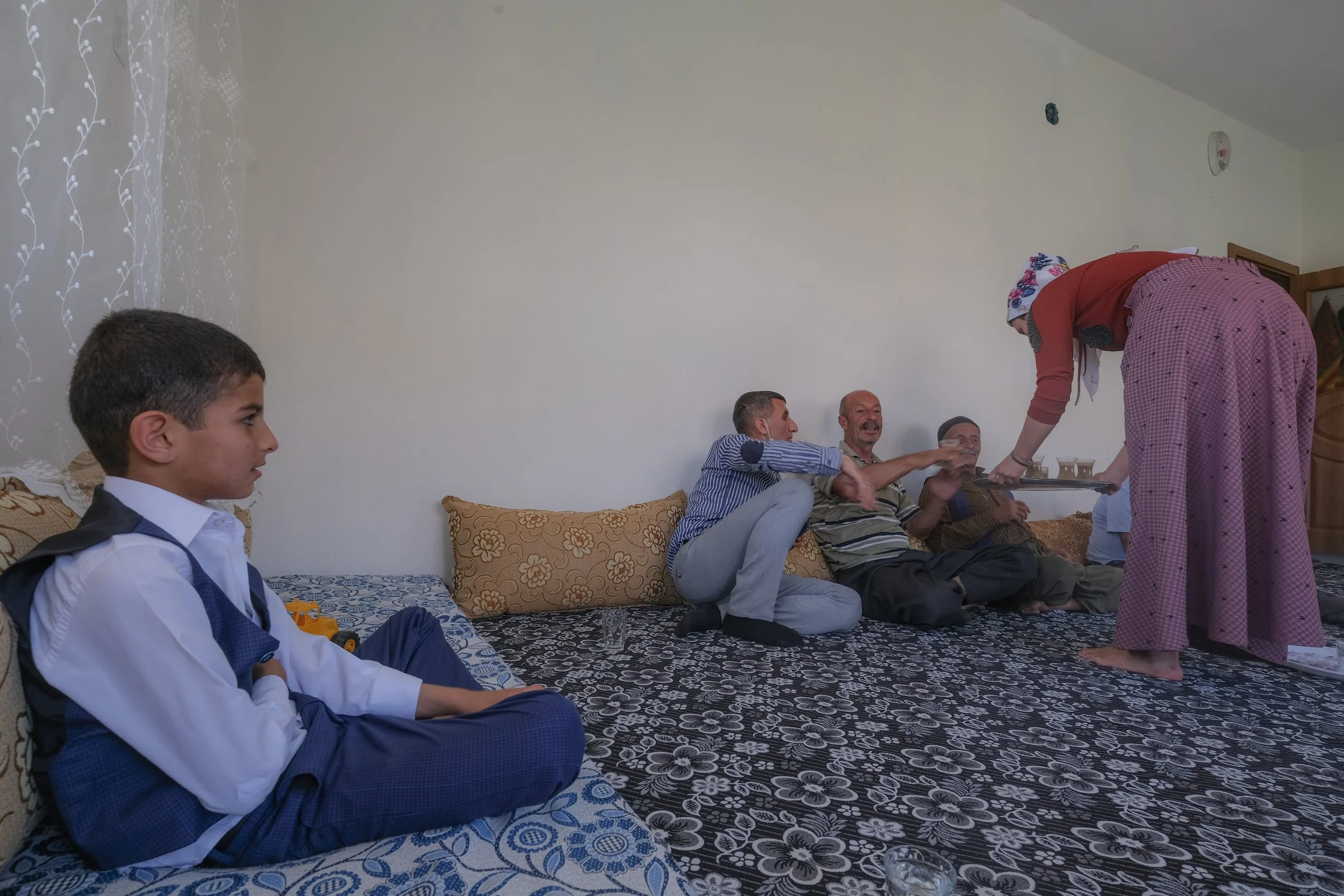
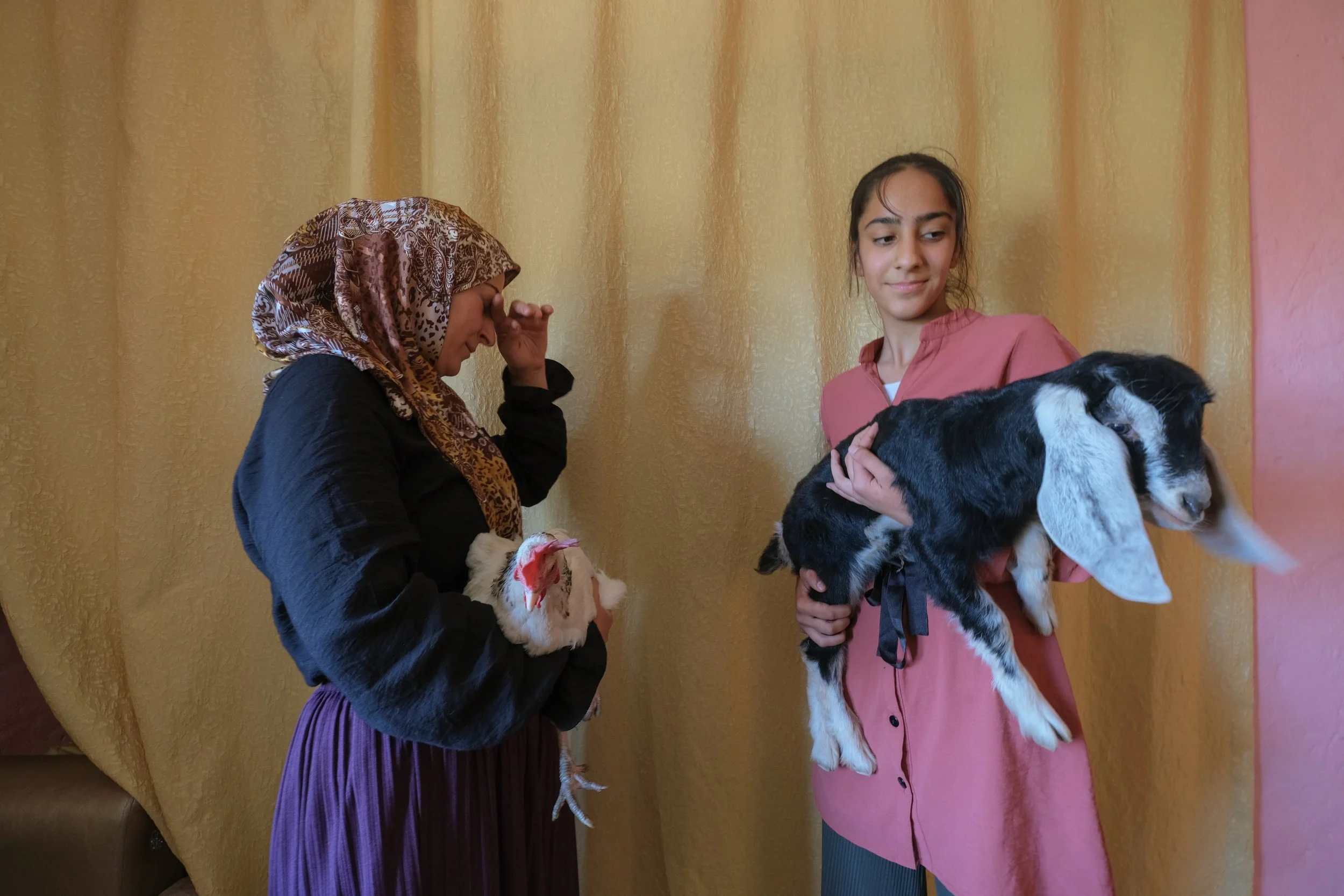
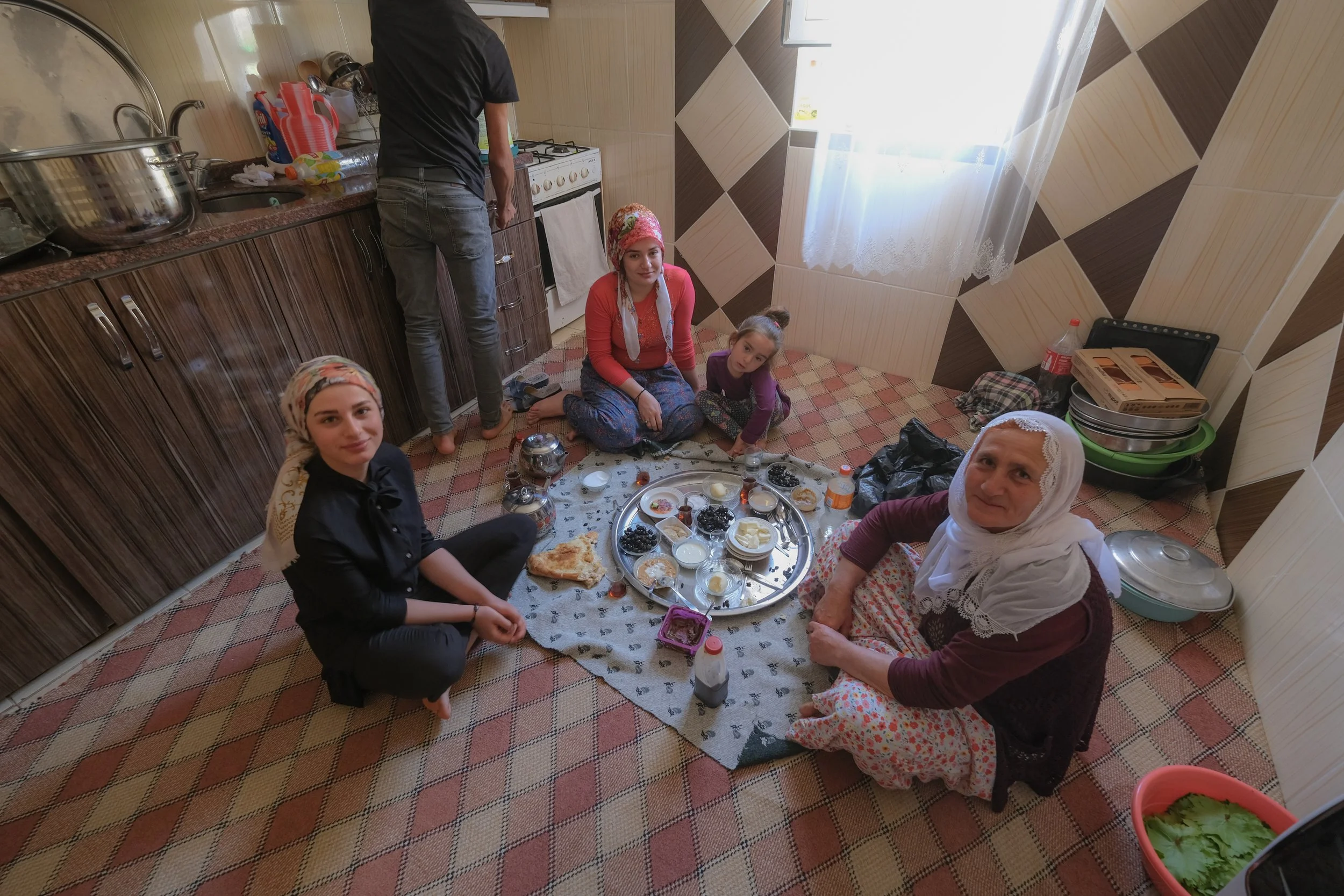
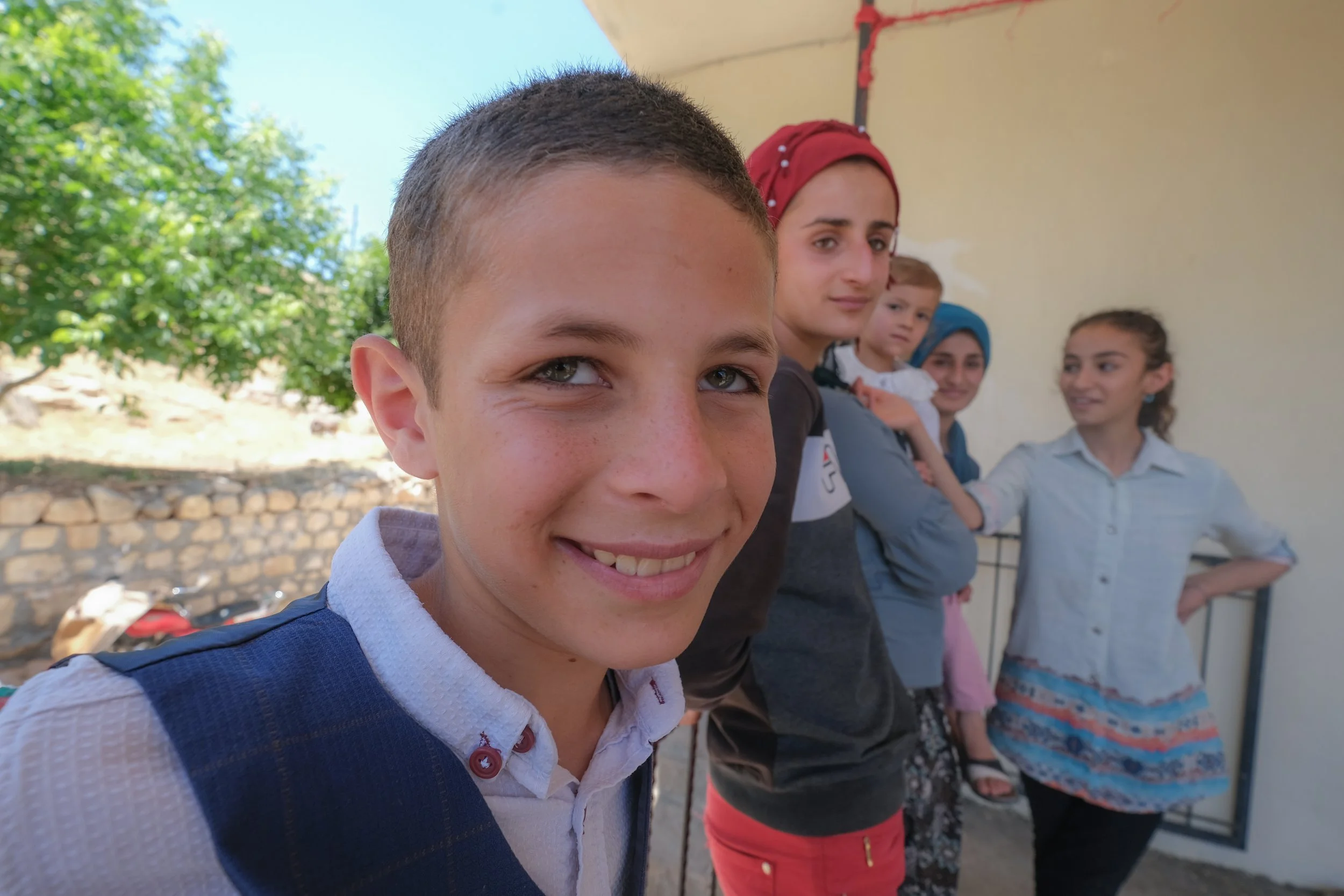
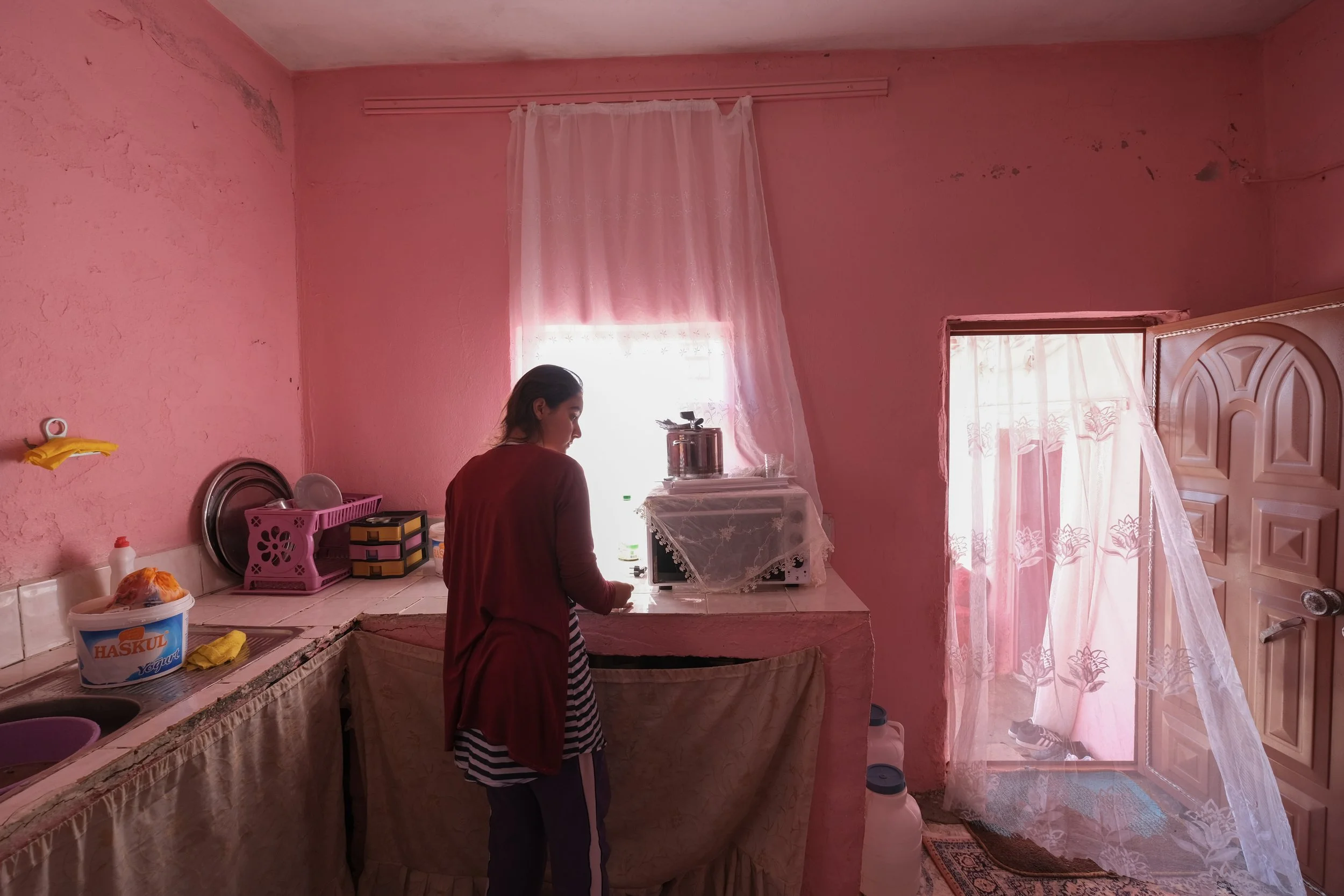
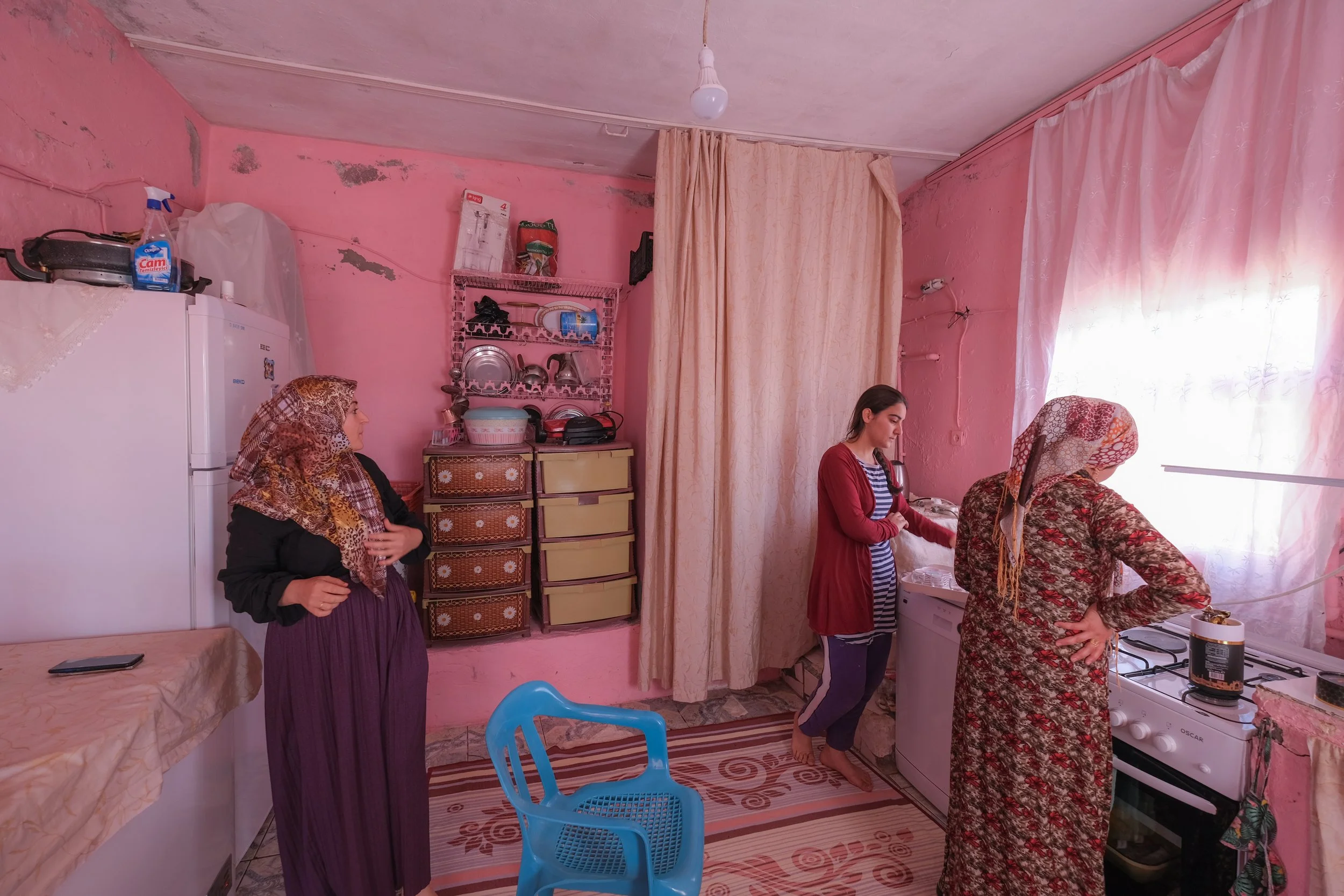
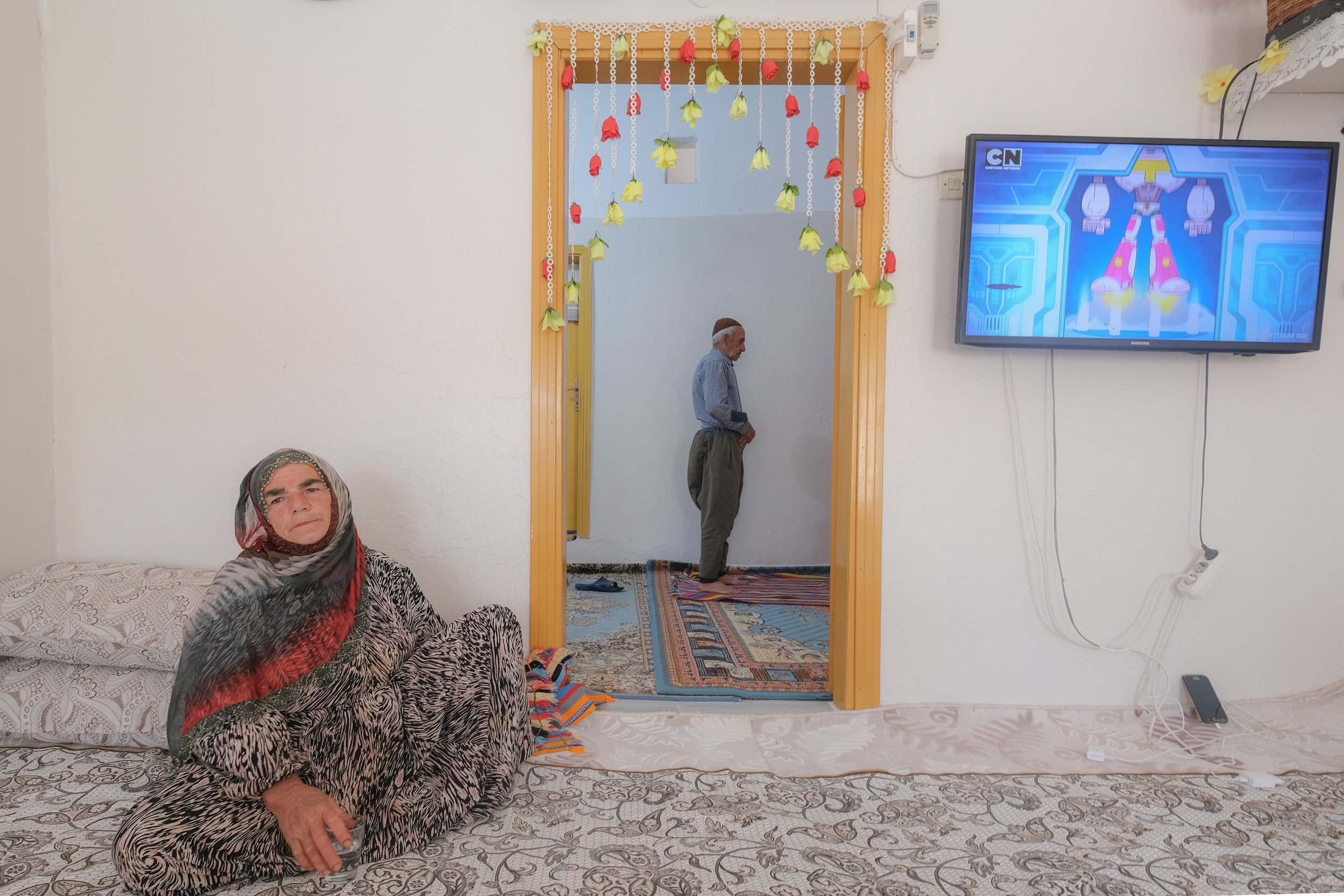
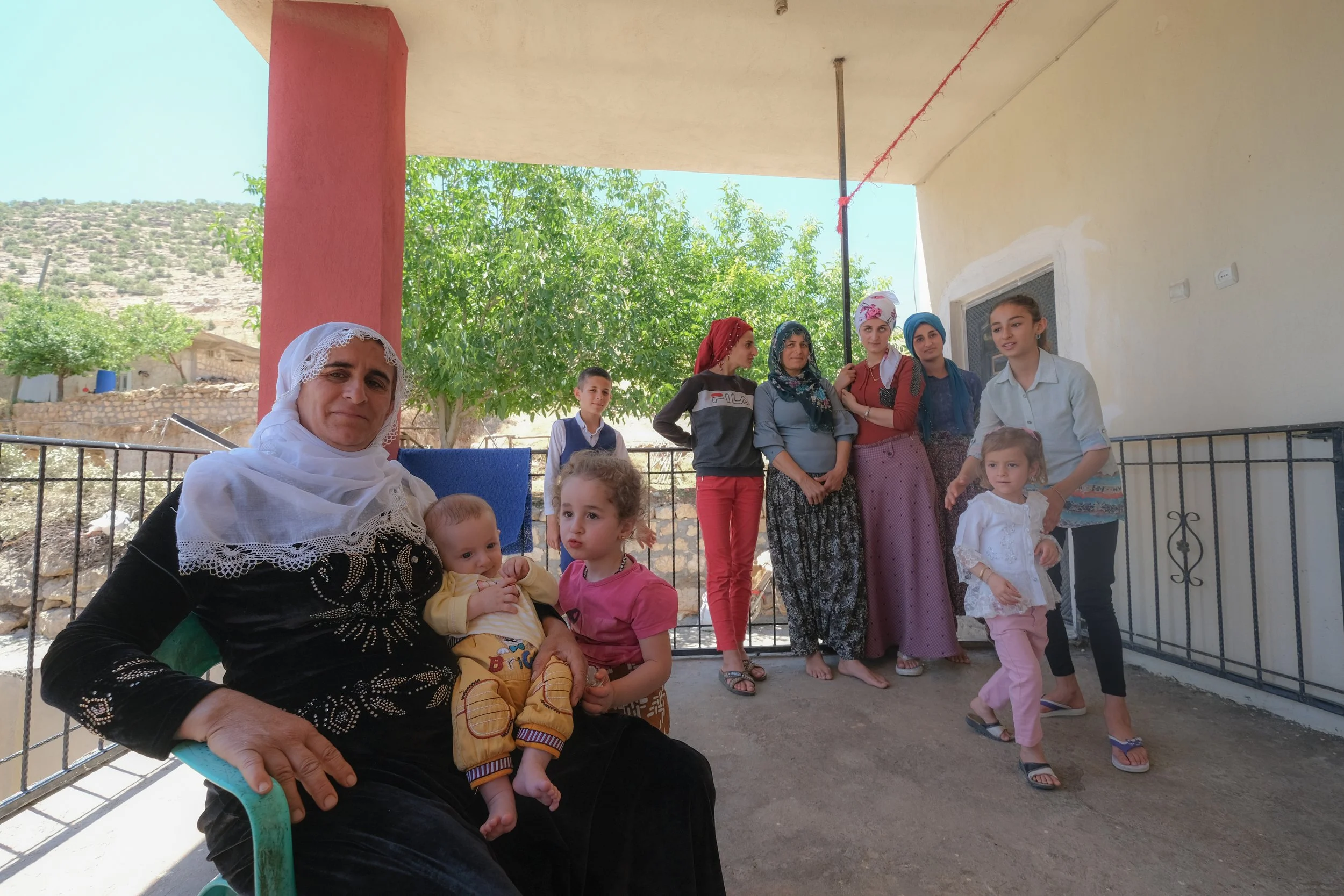
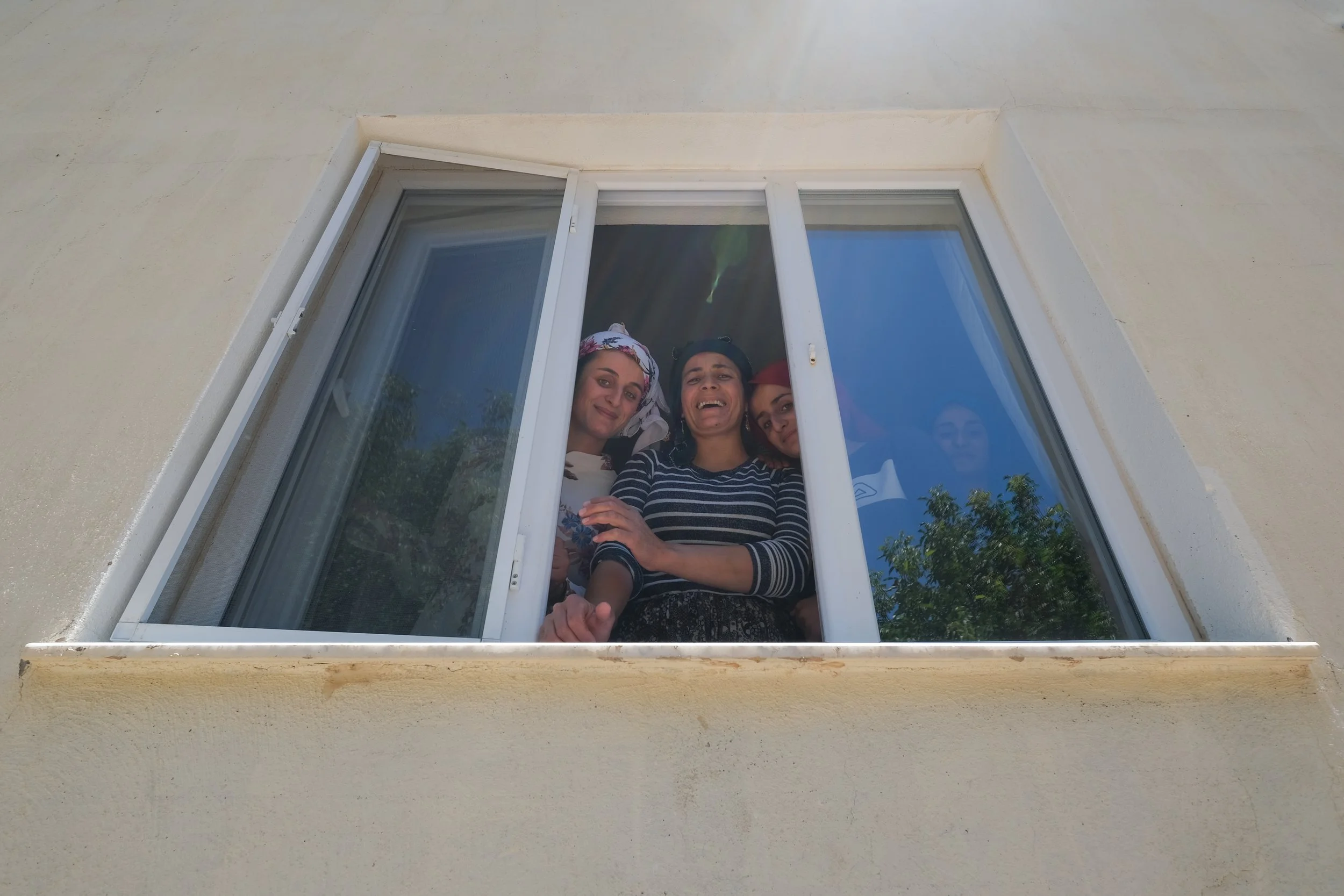
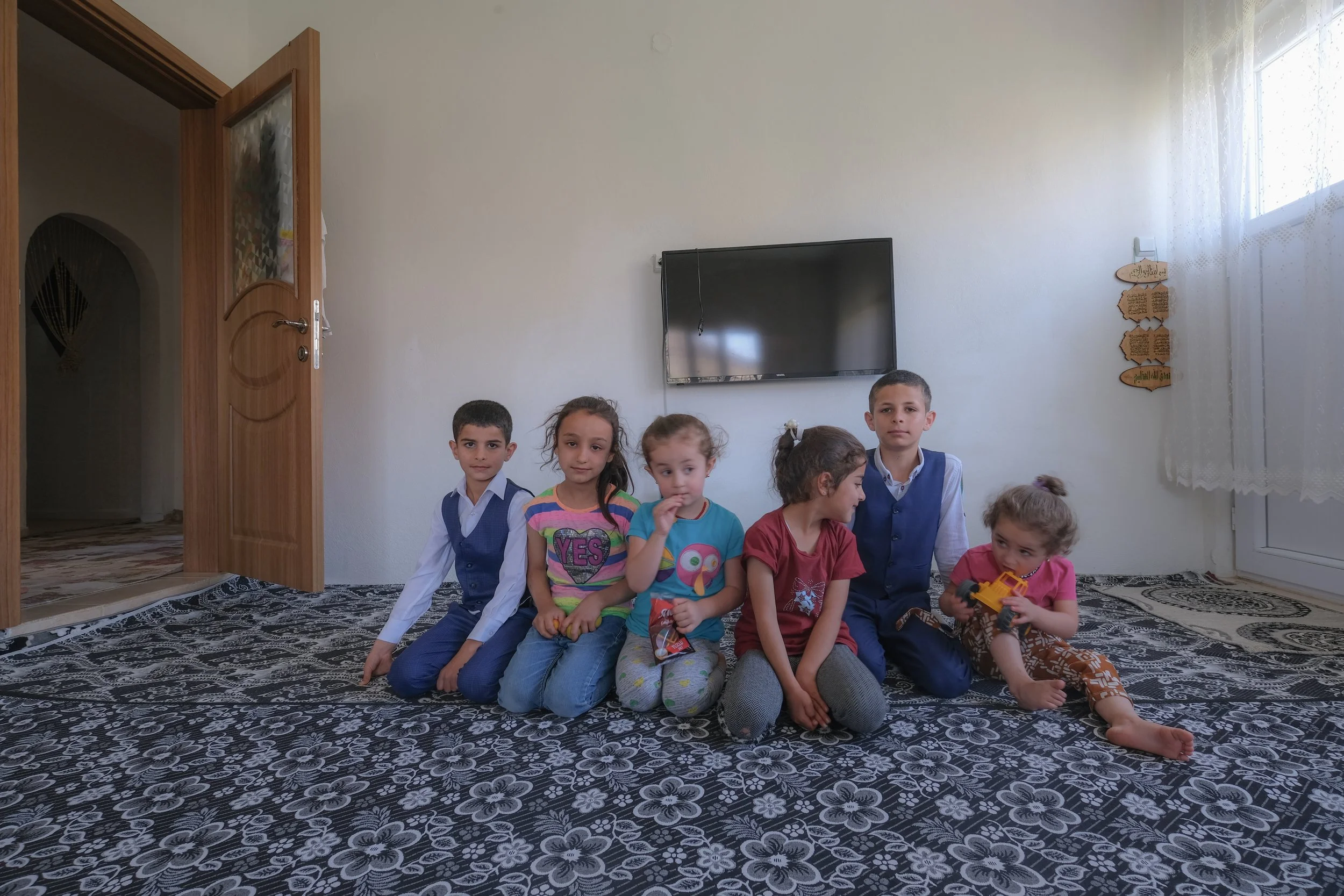
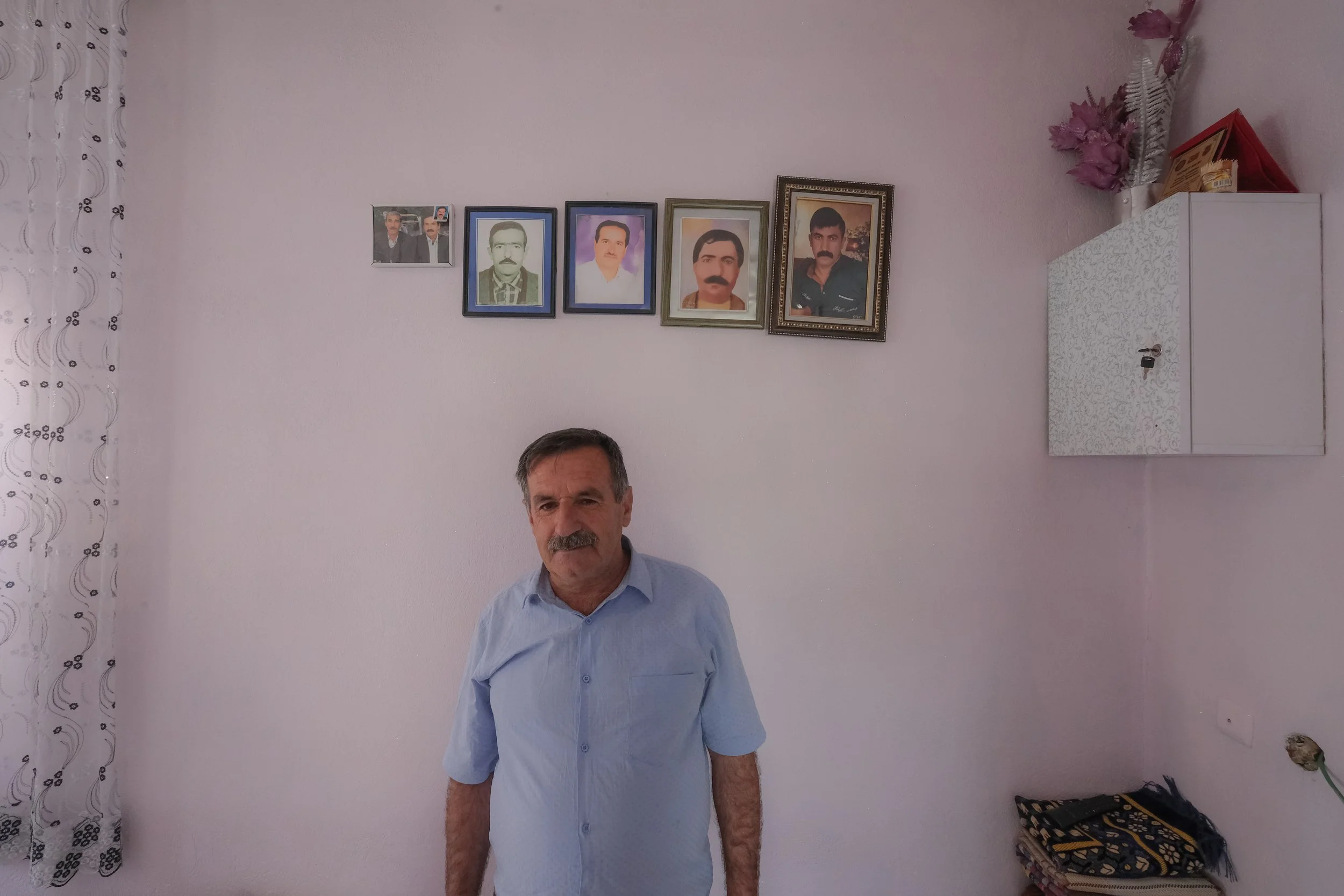
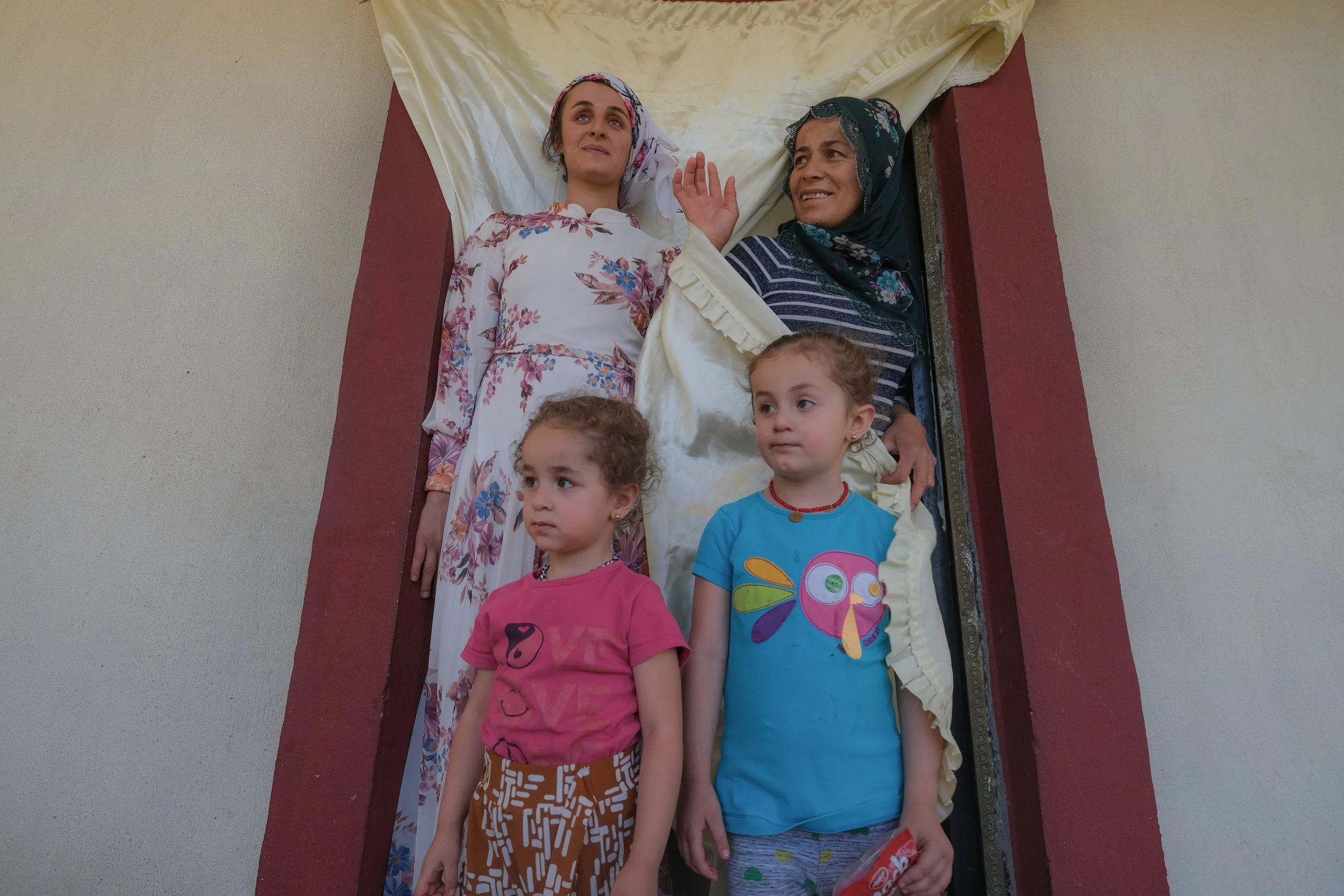
Women in the Back Room examines the quiet structure of domestic life in southeastern Turkey, where women’s labor organizes the household while remaining largely unspoken. The series was photographed in homes in Mardin, where daily routines unfold in spaces shaped by repetition, care, and expectation. Rather than presenting rural women as symbols of resilience or hardship, the photographs stay close to the ordinary gestures that sustain a home: sweeping a floor, clearing a table, adjusting a chair before someone else sits down.
Within these interiors, the female body rarely occupies the center of the frame. It moves through the room as a working presence bending, reaching, pausing between tasks. A hand crossing a table, a figure partially turned toward the camera, a moment of stillness in the middle of movement. These gestures appear mundane, yet they point to a structure in which domestic labor is constant and quietly assumed. In much of Turkey, such work has long been treated as a natural extension of womanhood. The photographs instead suggest a system learned through repetition and sustained across generations.
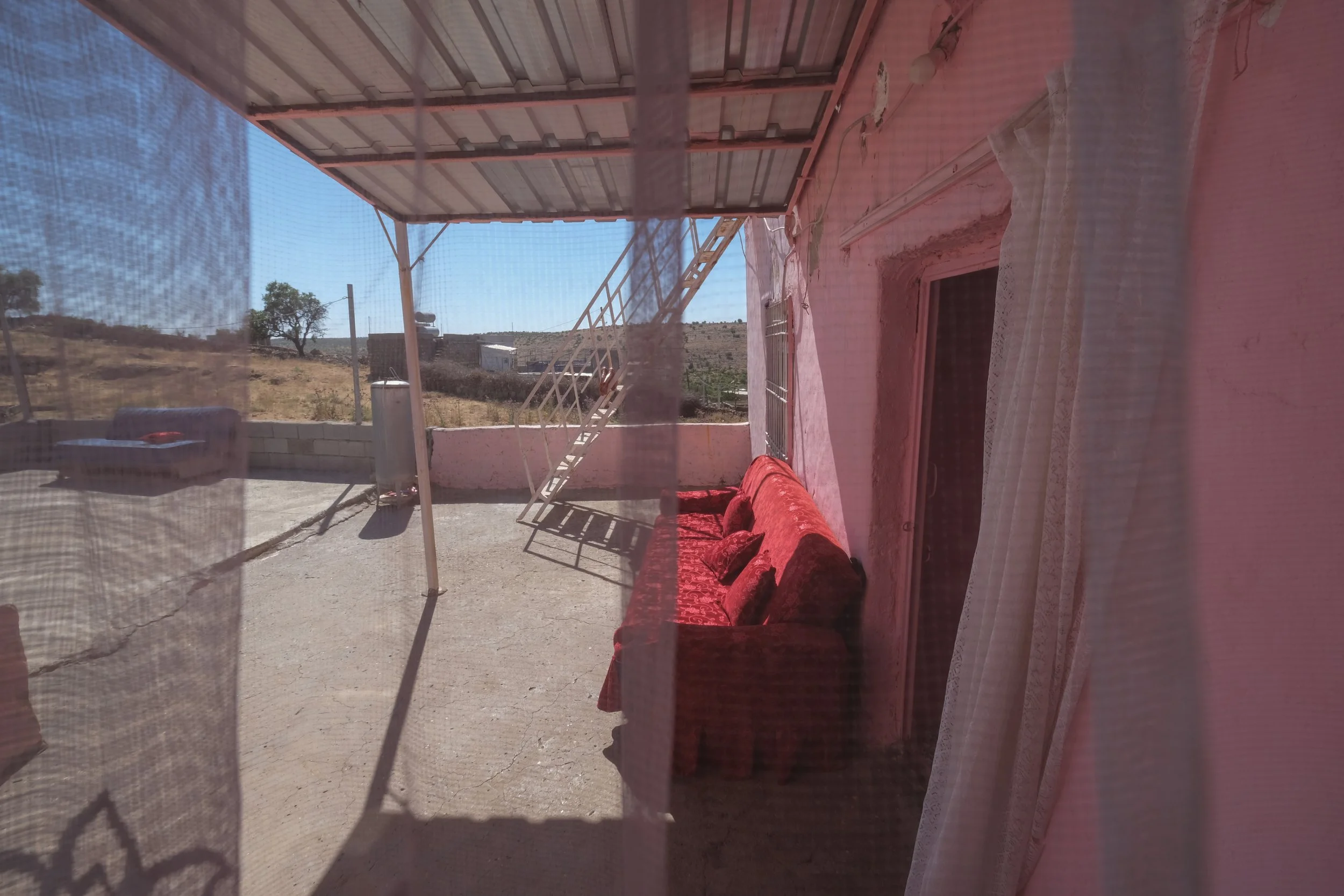
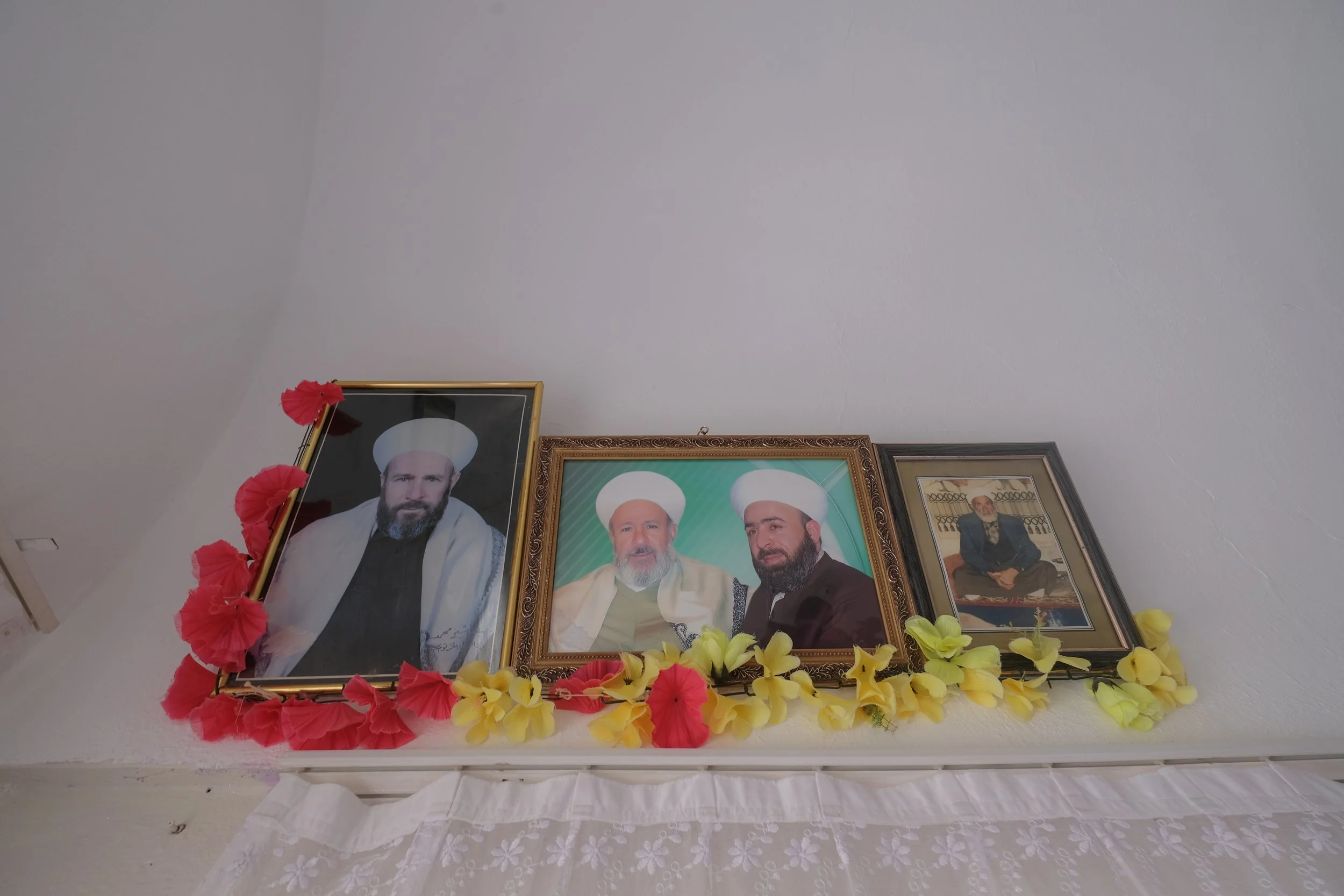
The spaces themselves carry traces of this effort. Dishes, fabrics, and beds accumulate not as decoration but as evidence of ongoing maintenance. Nothing in these rooms is neutral. Every object has passed through someone’s hands cleaned, folded, arranged, returned to its place. The home appears less as a private refuge than as a site of continuous labor, one that women maintain through routines that rarely come to an end.
The camera approaches these scenes without spectacle. The perspective remains at eye level, attentive to the density of everyday life. The images do not dramatize or expose; they simply stay with what is already there. As Susan Sontag once wrote, every photograph is an interpretation. Here, interpretation emerges through proximity rather than intervention. The framing does not intrude on the scene but follows its rhythm, allowing gestures and silences to carry their own weight.
The visual language reflects the same restraint. Soft contrasts, muted colors, and diffused light create an atmosphere where nothing insists on attention. This is not an aesthetic of nostalgia but a refusal of visual excess. In a culture where women’s work is expected yet rarely recognized, the images avoid turning that labor into spectacle. Instead, they allow space for fatigue, repetition, and the quiet persistence that structures everyday life.